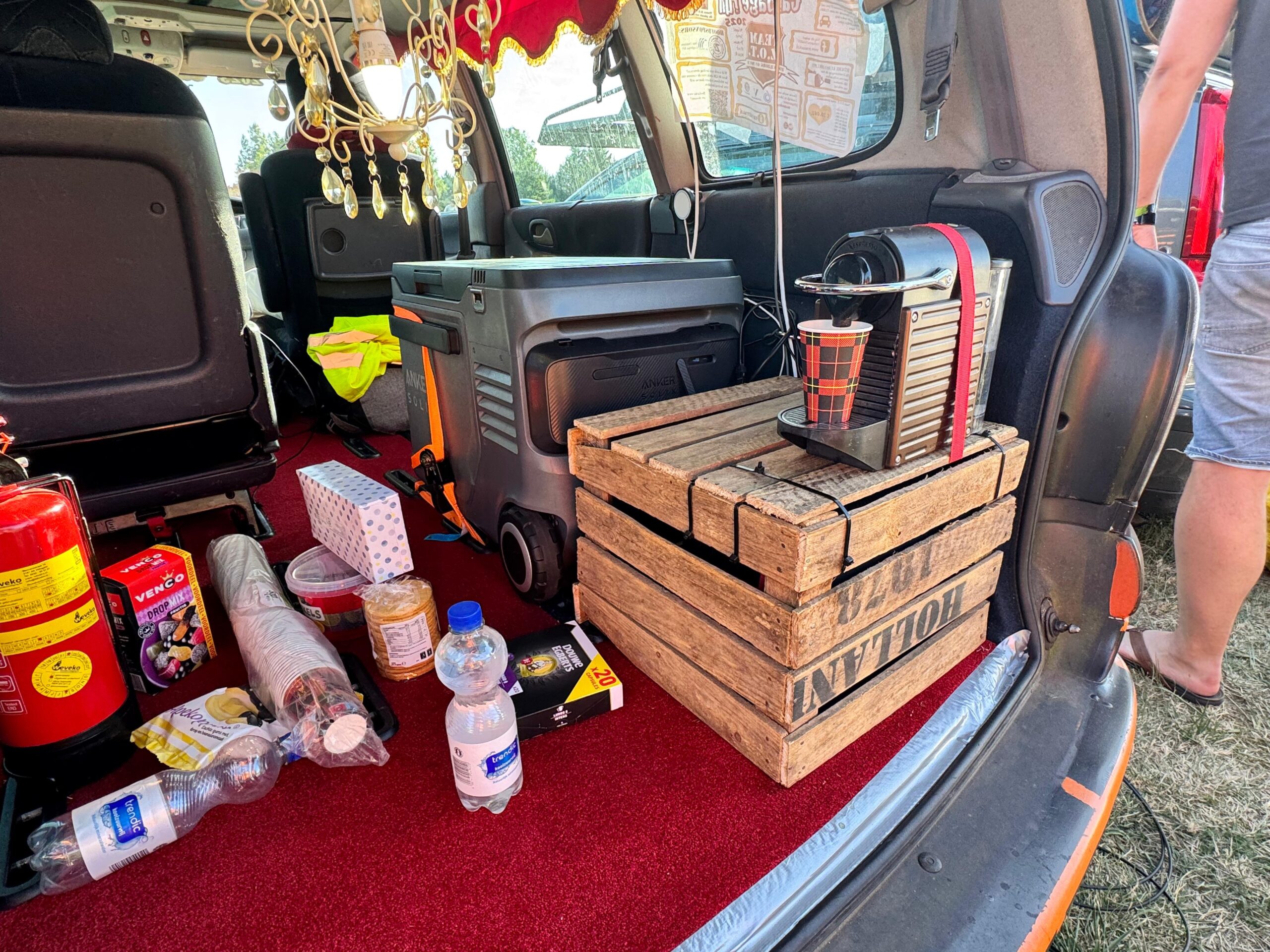
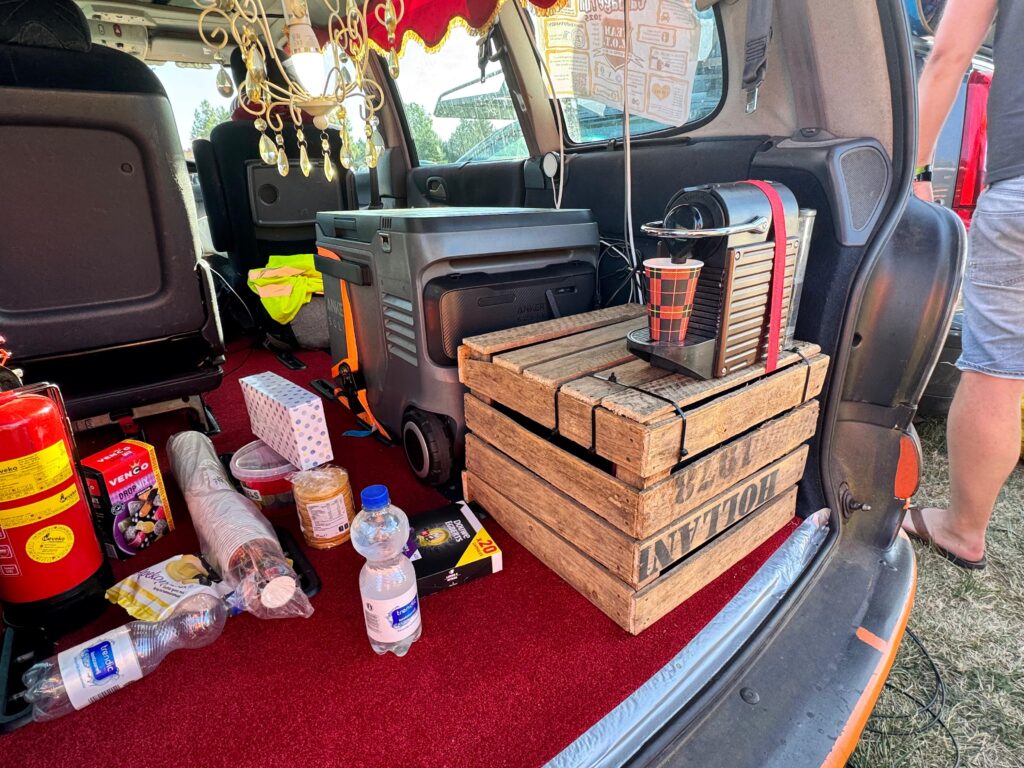
I tested the Anker SOLIX EverFrost 2 40L during the Carbage Run. We drove 3000 miles in almost 30 degrees Celsius. Long stages on gravel roads asked for proper refreshments, so we opened the lid very frequently and tried to keep it powered from a 25 year old car. This review combines field data with technical facts and extended daily use.
System architecture
The EverFrost uses a vapor compression refrigeration cycle with compressor, condenser, expansion system and evaporator. This is identical in principle to a domestic refrigerator you find in your kitchen, this offers stability and very efficient use of energy to stay cool.
Battery, Solar capacity and energy use
The removable battery provides roughly 288 watt hours of capacity. The 40 liter version supports two batteries. That increases total stored energy to approximately 576 Wh when fully configured. With a 288 Wh battery, a full cycle of heavy usage could nearly deplete one battery in a long hot day without charging. Solar input during stops significantly reduced net battery drain.
One battery handled a full driving day when supported by vehicle charging and solar. Two batteries would comfortably support a full day without external input at this temperature setting
We drove in near 30 degrees Celsius ambient temperature. During the Carbage Run the internal temperature in my unit remained exactly at the set value. It did not drift. It did not slowly increase over time. Frequent lid openings replace cooled air with warm ambient air. Each opening increases the internal heat load. Despite this repeated disturbance, the system maintained stable temperature control.
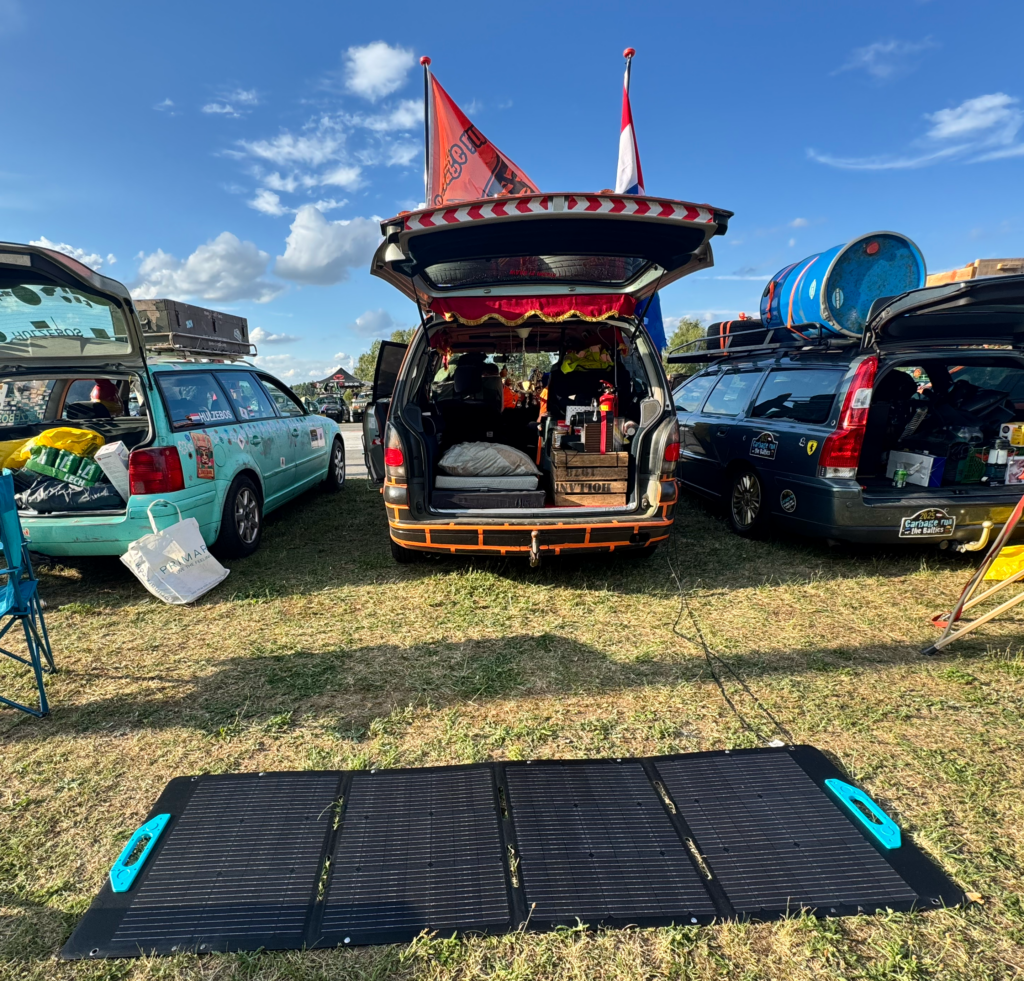
During extended summer operation, the 12 volt socket in our 25 year old car melted. The cooler continued functioning when supplied with proper power. The failure occurred in the vehicle’s aging wiring infrastructure. We were lucky enough to also have a Anker SOLIX Solar Panel that can be hooked up to the cooler, it worked slower but it worked like a charm!
| Day | Ambient temp | Usage pattern | Average power draw | Charging source |
| Day 1 | 28 to 30 C | Frequent opening, driving | 30 to 35 W | 12V car + solar |
| Day 2 | 27 to 29 C | Frequent opening, gravel | 35 to 40 W | 12V car + solar |
| Day 3 | 25 to 28 C | Moderate opening, mixed use | 25 to 30 W | Solar + short 12V |
Smart tech
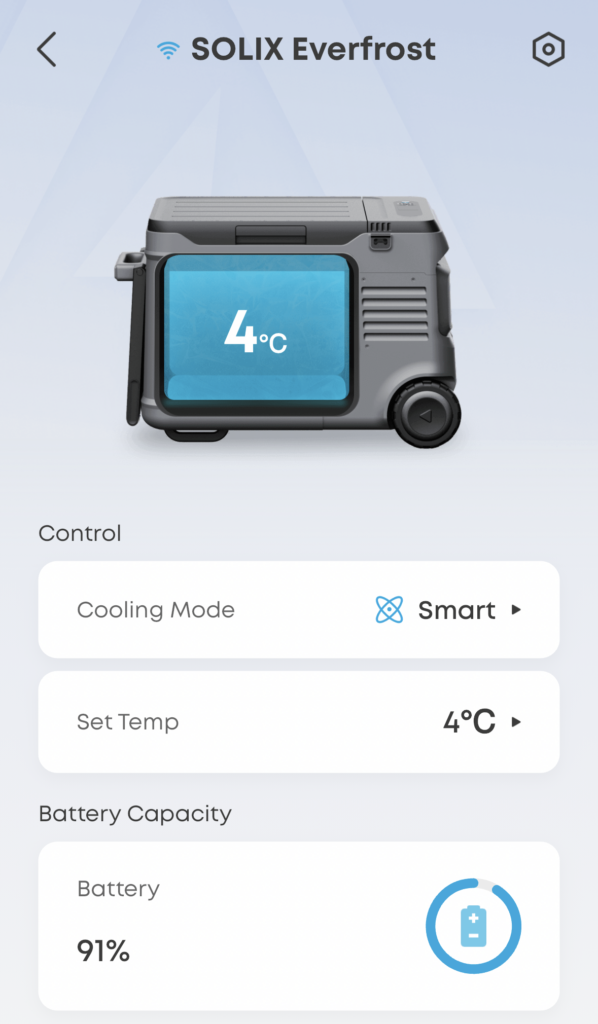
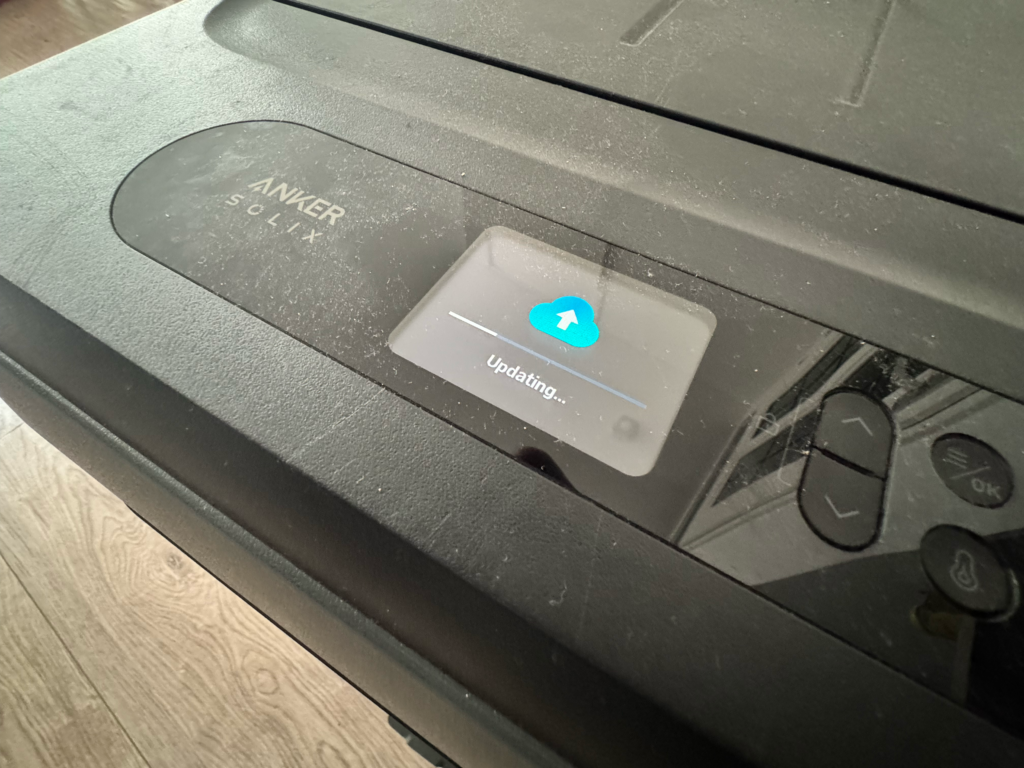
The EverFrost connects to the Anker app via Bluetooth and WiFi. Setup takes only a few minutes. The app shows real time internal temperature, set temperature, battery percentage and charging status. You can switch between Eco and Max mode, adjust cooling settings and see whether the compressor is running. Firmware updates are delivered through the app and install without hassle. That means Anker can improve battery management, compressor logic and protection thresholds over time.
It still feels slightly absurd that you are updating firmware on a cooler. But that is exactly where we are. If your car, doorbell and toothbrush receive updates, your portable fridge can too. In practice, it gives you more control and transparency instead of guessing what is happening inside the box.
Usage beyond the Carbage Run
Outside the Carbage Run, the EverFrost sees more use than I expected. A normal cooler never is asked to be borrowed this much, but this isn’t your average cooler!
The internal volume fits exactly two standard beer crates, almost 50 bottles. That practical detail changed how often we use it. For birthdays and gatherings, it functions as an additional mobile refrigerator. I now regularly hear the question, “can I borrow the cooler because I have a birthday and need the space.” That says something about real world utility.
The unit no longer serves only as adventure equipment. It acts as flexible cooling capacity at home and during events.